
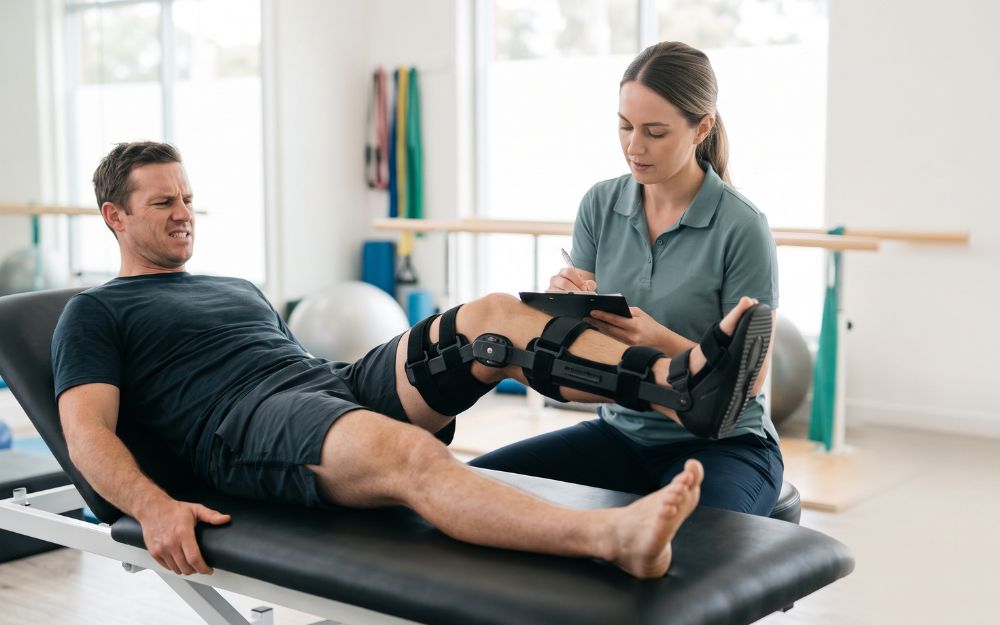
If you have been hurt in a car accident in Queensland recently, you are not alone — and the scheme’s own numbers now show it. The Motor Accident Insurance Commission’s most recent market briefing reports that the rate of compulsory third party (CTP) claims has been climbing since mid-2024, after several years of decline. Sitting quietly underneath that headline is a second trend that matters far more to you personally: a growing share of those claims are being run by injured people on their own, without legal help. This article explains what the data actually says, what it does not say, and what it means for the decisions in front of you right now.
What the scheme data actually shows
Queensland’s CTP scheme is monitored closely. Each quarter, the Motor Accident Insurance Commission (MAIC) publishes a market briefing that estimates the “risk premium” — the pure cost of claims that CTP insurers are expected to pay for vehicles registered in that quarter.
For the 2026 first-quarter underwriting period, MAIC estimated that risk premium at $207.80 per vehicle, up $4.33 on the previous review. Two things pushed it up: more claims being lodged, and slightly larger average claims. Core claim frequency was projected to rise 1.7 per cent, reversing a downward trend that had run from early 2021 to the end of 2023.
The briefing also notes a shift in the mix of claims. Lower-severity claims lodged directly with the insurer are increasing, while legally represented claims of similar severity are decreasing. In plain terms: more Queenslanders are dealing with a CTP insurer without a lawyer beside them.
None of this is a scandal. It is simply the picture of a scheme handling more people. But if you are one of those people, the mix matters.
Why “more claims” does not mean “easier claims”
It is tempting to read rising claim numbers as a sign that the system has become easier to use. That is not what the figures describe. Claim volume reflects how many people are injured and lodge, not how smoothly those claims run.
The same briefing observes that the proportion of claims coded as involving psychological injury continues to rise, and that the mean time from a vehicle’s registration quarter to final payment sits at around three and a half years. Motor accident claims are not quick, and the injuries inside them are becoming more complex, not less.
A CTP claim in Queensland is governed by the Motor Accident Insurance Act 1994 (Qld). Your entitlement to damages is not set by the insurer’s goodwill. It is set by law, by evidence, and by the medical picture that gets built over the months after your accident. That evidence has to be gathered while you are also trying to heal.
The part that gets missed: the medical record is the claim
Here is the thing many injured Queenslanders discover late. In a motor accident claim, your medical record is your claim.
Damages are assessed largely on what your treating practitioners recorded — when you first reported the pain, how it progressed, what treatment you had, what you could and could not do, whether you returned to work and on what terms. If there are gaps in that record, they are difficult to fill later. A three-month gap between the accident and your first physiotherapy appointment is not a neutral fact; it becomes an argument.
That is not a reason to panic if your record is imperfect. It is a reason to understand that treatment and compensation are not two separate projects running on separate timelines. They are the same story, told once.
This is the reasoning behind Lifestyle Injury Lawyers’ integrated approach to recovery — assessment, treatment and compensation handled as one coordinated response rather than as three disconnected errands you have to run yourself while injured.
An important boundary: none of this means a law firm should be directing your medical care, or that any practitioner should be shaping their clinical opinion around a claim. Your treatment decisions belong to you and your treating practitioners. Coordination means making sure the right care happens early and is properly documented — not influencing what that care concludes.
What a CTP insurer is, and is not
A CTP insurer is not your insurer. When you make a claim after a Queensland motor accident, you are generally claiming against the CTP insurer of the vehicle that caused the accident — not your own. If you are unsure how that works in practice, our guide to making a CTP claim on the Gold Coast walks through the basics, and our road accident compensation page sets out how we approach these claims.
That insurer has statutory obligations, and Queensland’s scheme is designed to be cooperative rather than combative. Many claims settle sensibly. But the insurer’s claims officer is not your adviser. They are a party on the other side of your claim, with their own duties and their own commercial interests, and nothing they say to you is legal advice.
Queensland’s competitive CTP premium arrangements — where licensed insurers set their own rates each quarter within limits set by the regulator — change what drivers pay, not what injured people are entitled to. Your entitlements come from the legislation. Which insurer happened to be on the at-fault vehicle’s registration does not change the law that applies to you.
Time limits are the trap in a rising-volume scheme
Volume creates pressure, and pressure creates delay. The single most damaging thing a busy scheme does to an unrepresented claimant is let time pass.
Queensland motor accident claims run on statutory notice periods and a limitation period. Miss one, and you may need to explain the delay before anyone even looks at the merits of your injury. Some late claims can be saved. Some cannot.
The periods that apply to you depend on the type of claim, your circumstances, and when you knew what you knew — which is exactly why they are not something to work out from a website at eleven o’clock at night. The practical rule is simpler than the law: if you were injured on a Queensland road, get advice early rather than late. Early advice is almost always cheap. Late advice is sometimes impossible.
Should you run your own claim?
Some people should. If your injury was genuinely minor, resolved fully within weeks, cost you nothing in earnings and left no ongoing symptoms, a direct claim may be a reasonable path.
The picture changes when any of the following apply:
- Your symptoms are still present more than a few weeks after the accident
- You have missed work, reduced your hours, or changed duties
- There is any suggestion the accident was partly your fault
- You have a psychological injury — anxiety about driving, sleep disruption, low mood
- Your treatment involves imaging, specialists, injections or surgery
- The at-fault vehicle was unregistered, unidentified, or the circumstances are disputed
- The insurer has made an early offer while you are still receiving treatment
That last one deserves emphasis. An offer made before your medical picture has stabilised is an offer made without the information that determines its value.
If you are unsure whether the accident was partly your fault, that alone is not a reason to stay quiet — Queensland law deals with shared fault through apportionment rather than an automatic bar, as we explain in our article on claiming when you may have been to blame.
What “No Win, No Fee” actually means
Cost is one of the main reasons people run claims alone, so it deserves a plain answer rather than a slogan.
A No Win, No Fee arrangement means professional fees are not payable if the claim is unsuccessful. It does not automatically mean nothing is ever payable in any circumstance — outlays, disbursements and the treatment of any costs orders should be explained to you in writing before you sign anything, and you are entitled to ask exactly what happens in each scenario.
The right question to ask any lawyer is not “is it no win, no fee?” It is “show me, in writing, what I pay in each possible outcome.” A firm that answers that clearly is a firm worth talking to.
Practical takeaways
- See a doctor early and keep going. Consistency in your medical record is worth more than any argument made later.
- Report the accident properly and keep a copy of everything — police event number, registration details, photographs, correspondence.
- Write down what changed. Sleep, driving, lifting, your mood, your work. Contemporaneous notes are evidence.
- Do not accept an early offer while your treatment is still evolving.
- Get advice before deadlines become a problem, not after.
- Remember who the insurer works for. They can be perfectly reasonable and still not be on your side.
- Ask what a claim will cost you before you commit to anything.
About Lifestyle Injury Lawyers
Lifestyle Injury Lawyers is a Gold Coast-based Queensland compensation firm built around a simple idea: your injury may be an event, but your recovery is a journey. Assessment, treatment and compensation operate as one unified health-legal team from day one, so the care you need and the claim you are entitled to move together instead of competing for your attention. With more than ten years helping injured Queenslanders — and offices in Southport and Fortitude Valley serving clients across Queensland — we work on a No Win, No Fee basis and offer a free Health and Compensation Claim Assessment. We are also a proud sponsor of the Gold Coast Titans. One team. No Win, No Fee.
Talk to someone before the next deadline
If you have been injured on a Queensland road, a short conversation now is worth more than months of guessing. Call Lifestyle Injury Lawyers on (07) 5627 0321 for a free Health and Compensation Claim Assessment, or get in touch through our contact page. Focus on healing. We’ll take care of the rest.
This article is general information only and is not legal advice. Time limits apply to compensation claims in Queensland — speak to a lawyer about your circumstances.