
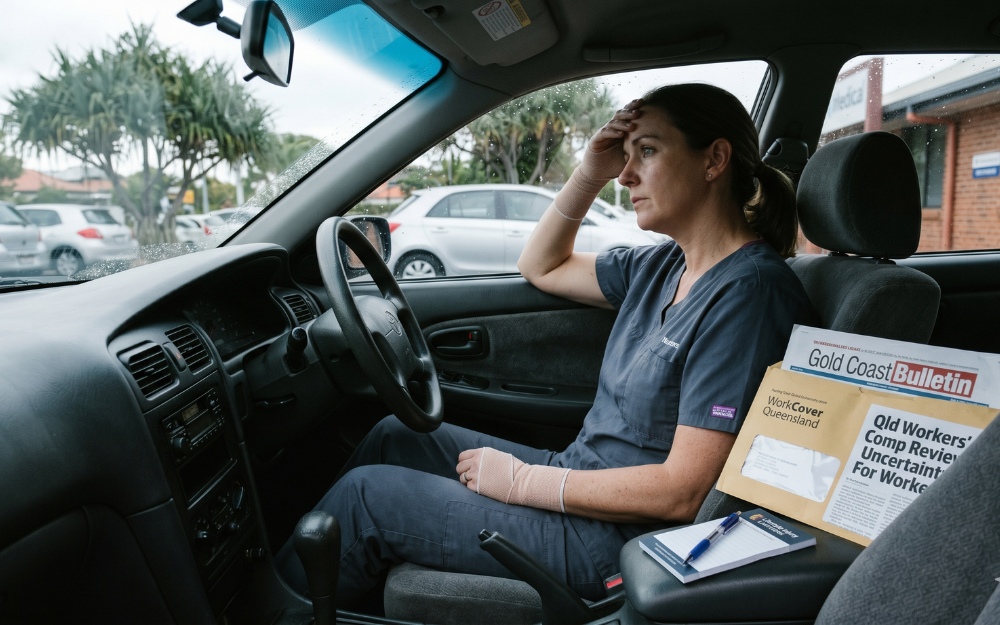
If you’ve been injured at work in Queensland recently — or if you’re carrying a workplace stress injury you haven’t done anything about yet — you’ve probably seen headlines about the state government reviewing the workers’ compensation scheme. You may be wondering what that means for your claim, your benefits, and your timeline to act.
Here’s the short version. Right now, nothing has changed. The Workers’ Compensation and Rehabilitation Act 2003 (Qld) (WCR Act) still governs every claim. WorkCover Queensland still accepts applications under the same rules. But the rules are being formally reviewed for the first time since 2023, and submissions to that review close on 31 May 2026. If you’ve been waiting on a claim or sitting on an injury, this is the moment to understand where the scheme stands — and where it might head.
Why the review is happening now
Under section 584A of the WCR Act, Queensland’s workers’ compensation scheme must be reviewed every five years. The 2026 review was formally instructed by the Deputy Premier and Minister for Industrial Relations earlier this year, with reviewers asked to report on the scheme’s operation, sustainability, and response to emerging trends. Written submissions are open and close on 31 May 2026, with the review expected to be finalised in the second half of 2026.
A handful of pressures are driving it. Since the previous review there have been emerging trends including increasing primary and secondary psychological injury claims, increased reporting of fraud and related offending, and questions about the suitability of self-insurance arrangements. The most-discussed of these is the rise in psychological injury claims.
The numbers are striking. Queensland Government data shows primary psychological claims have risen by almost 97.4 per cent in the last five years, from 1,950 in 2020–21 to 3,849 in 2024–25. Secondary psychological injury claims have also increased over the last five years by 62 per cent, from 1,921 to 3,118, including a 19 per cent jump in 2024–25. Even with that growth, primary psychological injury claims still account for only around five per cent of total claims in Queensland, with roughly 75,000 claims overall in 2024–25.
In other words: the scheme is dealing with more psychological injuries than ever, and that’s the central question the review is wrestling with. How should the scheme support genuinely injured workers without becoming financially unsustainable?
What the review is actually looking at
The terms of reference are broad, but four themes stand out:
Psychological injury claims. The reviewers have been asked to look at the growth of primary and secondary psychological claims and the impact on injured workers, employers, and the scheme. Note this is partly about prevention — addressing workplace causes — and partly about management — how claims are assessed and supported.
Fraud and integrity. The reviewers will examine the effectiveness of existing fraud offences and the scheme’s detection and enforcement measures.
Self-insurance arrangements. Some larger Queensland employers (generally those with 2,000+ employees) hold their own self-insurance licences instead of insuring through WorkCover. The review will consider whether those arrangements remain fit for purpose.
Return-to-work outcomes. Queensland has historically lagged some other states on rehabilitation and return-to-work performance for psychological injuries.
In other states, similar reviews have produced significant change. New South Wales, for example, introduced new eligibility tests and higher Whole Person Impairment thresholds for primary psychological injury claims through reforms commencing in 2026. Queensland is taking a different approach — running its own consultation rather than copying interstate templates — but interstate developments are part of the conversation.
What hasn’t changed (and probably won’t change soon)
This is the bit worth highlighting if you’re injured today. The current rules still apply.
If you have a work-related psychological or physical injury in Queensland:
- The WCR Act still entitles you to apply for statutory compensation if employment was a significant contributing factor to your injury.
- WorkCover Queensland is still your insurer for most claims (some larger employers self-insure).
- Statutory time limits still apply. Most applications must be lodged within six months, although the insurer has discretion to accept later applications in some circumstances.
- Common law (negligence) claims against employers are still governed by chapter 5 of the WCR Act, with the irrevocable-election rule under sections 188 and 189 still operating for workers assessed under 20 per cent permanent impairment.
A review might change those rules in future. It does not change them today. Worth repeating: missing a deadline because you “thought the law was changing” is one of the most painful ways to lose a claim that would otherwise be perfectly valid.
If you have a psychological injury claim — what to do now
Psychological injury claims are more complex than physical injury claims, and they are scrutinised more closely. Three practical things matter:
See a treating practitioner early. A GP, psychologist, or psychiatrist diagnosis isn’t just for your wellbeing — it’s the foundation of your evidence. Delayed treatment makes it easier for an insurer to argue your condition didn’t arise from work or wasn’t serious enough to warrant compensation.
Document the workplace events. Dates, emails, witnesses, HR exchanges. Psychological injury claims often turn on a contested factual question: was this reasonable management action taken in a reasonable way (which is excluded from coverage), or was it conduct that went beyond that line?
Get advice on the strategy, not just the form. Most workers can lodge the initial application themselves. The harder question is what to do after the decision — whether to dispute, whether to pursue a common law claim if the injury is severe enough, and when to act on each.
How the integrated model helps with psychological injury claims
This is where our work at Lifestyle Injury Lawyers looks different. Psychological injury recovery is rarely a straight line. People often need coordinated psychological treatment, GP support, sometimes psychiatric input, and a legal pathway that doesn’t add to the stress.
Our Assessment + Treatment + Compensation model means the legal claim and the recovery work are managed alongside each other — not as two separate worlds that the injured person has to bridge. Your treating practitioners remain your practitioners (the WCR Act protects that, and recent amendments have strengthened it). Our role is to make sure the legal process works around the recovery, not against it.
For a psychological injury claim in particular, that coordination matters. The treatment records, the timing of symptoms, the response to workplace events — these are the building blocks of both your recovery and your evidence.
What’s likely to happen next
The reviewers will report in the second half of 2026. A government response typically follows. Any legislative changes would then need to pass through Queensland Parliament. Realistically, even if changes are recommended, they would not commence until 2027 at the earliest, and transitional provisions would usually protect claims already in progress.
In the meantime: if you have an injury and have been putting things off, don’t let the headlines paralyse you. The clearest thing the next 12 months will deliver is current law, currently enforced.
Practical takeaways
- The 2026 review is consultation, not legislation. Current rules continue to apply.
- Submissions close 31 May 2026. The review is expected to report later this year.
- Psychological injury claims are growing fast in Queensland but remain about five per cent of total claims.
- Statutory time limits, the 20 per cent permanent impairment election rule, and the reasonable management action exclusion all still apply.
- Early treatment, careful documentation, and early legal guidance remain the three things that most influence outcomes.
How Lifestyle Injury Lawyers can help
We’re a Gold Coast-based Queensland compensation firm with more than ten years helping injured Queenslanders, and proud sponsors of the Gold Coast Titans. Our Assessment + Treatment + Compensation approach is built on a simple idea — that your recovery is a journey, not just a claim — and brings a unified health and legal team together from day one.
We act on a No Win, No Fee basis and offer a Free Health & Compensation Claim Assessment so you can understand where you stand without committing to anything.
If you’ve been injured at work in Queensland and want to know what your options look like today — not in some future version of the law — call us on (07) 5627 0321 or book a free assessment via our website. Focus on healing. We’ll take care of the rest.

Lifestyle Injury Lawyers
Queensland compensation lawyers with offices on the Gold Coast and in Brisbane.
This article is general information only and is not legal advice. Time limits apply to compensation claims in Queensland — speak to a lawyer about your circumstances.
